A friend of mine just asked me about my opinion and thoughts on this piece about the 1999 Nato action in Kosovo that appeared in the Guardian today. This is what I had to say:
I don't have any problem with the article. I actually find it very good. I have never liked how instead of supporting peaceful and genuinely democratic movements like Ibrahim Rugova's Gandhi-inspired Kosovo independence movement, the West chose to support a violent band of criminals (the KLA) who terrorised Kosovo's population (regardless of ethnicity) and were no different from Serb paramilitaries such as Arkan's Tigers. For all the paramilitaries in the Balkans, the nationalist ideals they ostensibly defended were just a powerful tool to easily sway their kinfolk into believing they were actually doing 'good', which in turn coerced the population to participate or ignore the actual crimes they were committing. The ensuing chaos ensured an environment in which such criminal activity could flourish. The fact that Arkan and the KLA, mortal ethnic foes according to the nationalist diatribe of the time, worked together proves this (they divvied up who controlled what parts of Kosovo in the petrol smuggling trade). The 2001 conflict in Macedonia was not a fight for Albanian rights but a cigarette-smuggling turf war between Macedonian and Albanian criminal groups.
I'm particularly glad that this point was made in the article: But if the west had wanted to act morally in the Balkans and to protect the people in Kosovo there were solutions other than war with the Serbs, and options other than backing the KLA – the most violent group in Kosovan politics. They could have backed genuine multi-party negotiations, or offered to lift sanctions on Belgrade if a peaceful solution to the problem of Kosovo could be found.
Yes, the point could have been made of Milošević's past genocide-inducing actions in Bosnia and that Serb para-militaries were operating in Kosovo, but the bottom line is that the West should not have backed one criminal group and painted them as 'good' in order to fight against another bunch of criminals.
Why can I hear many in the Balkans, including Albanians, saying 'told you so'. The shit will be hitting the proverbial fan once this article by the Guardian makes itself known in the Balkans. With attention focused on the disputed country/province (depending who you talk to) after last weekend's not-so-transparent elections, a Council of Europe (CofE) report into crime in Kosovo has confirmed allegations that members of the Kosovo Liberation Army kidnapped and killed Serbs, whose kidneys were then later sold.
The CofE report, tabled by human rights investigator Dick Marty, will not be news for people in the Balkans. They have known about these 'revelations' now for years. However, in a true display of the ever-persistent colonial, patronising and superiority complex attitude of the West towards the 'uncivilised' Balkans, now they are being taken seriously. One of the main (not-new) points highlighted was that former Kosovo Liberation Army (KLA) and current Kosovo president Hashim Thaçi's links with organised crime date back more than a decade, when those loyal to his Drenica Group became the dominant faction within the KLA.
Marty has pointed out Western double standards towards human rights in Kosovo. Since 1998 the West has been purposely blind in its support for the KLA and, consequently, for the Kosovo government led by Thaçi. The West has chose to ignore suspected war crimes by the KLA, "placing a premium instead on achieving some degree of short-term stability". He concludes that during the Kosovo war and for almost a year after, Thaçi's forces meted out revenge against Serbs, Roma and ethnic-Albanians accused of "collaborating" with the enemy.
This inquiry was commissioned after the former chief prosecutor for war crimes at The Hague, Carla Del Ponte, said she had been prevented from investigating senior KLA officials. Del Ponte's claim has grounds in that only four Albanians have faced the War Crimes Tribunal, one of which was former KLA commander-turn-politician (or crime boss to others) RamushHaradinaj, who was first acquitted but now is facing the dock again after the 'revelation' that his thugs intimidated witnesses.
No matter what the West says, an overwhelming majority of people in ex-Yugoslavia see the Tribunal as a politically-motivated show trial with no legitimacy, whereby a disproportionate number of Serbs have been tried, of the two Macedonians tried the 'clearly innocent' nobody gets 12 years while the 'guilty-as-hell' former Interior Minister is acquitted of all crimes, while so few Albanians have been tried. Then the West has the audacity to criticise Balkan countries for their less-than-transparent judicial systems!
What this report will signal is that all the suspicions many in the Balkans have had that the West were taking sides in the Balkan conflicts, despite the West's denials, are true. It has mainly been nationalist political groupings who have been the most vocal advocates of these former conspiracy theories now exposed as fact. The unwitting consequence of this is that it will increase the credibility of other political theories and tales of Western intrigue that many in the Balkans believe and propagate. However, they are not to blame. The West should not have supported criminals who are callous enough to fan the popular nationalist notion of 'regaining greater Albania' to disguise their organised crime and maintain the power structures which allow such illegal activities to thrive. The point is that this current system of governance in Kosovo is how Serbia under Milošević operated. The West rightfully was quick to at least vilify Milošević and Serbia; however when it comes to Kosovo now, they not only have looked the other away but have fully supported and protected its leaders and the corrupt system they have created!
I'll be keeping a close watch to see what the political fallout will be from this report. I hope that Kosovo's long-suffering population will finally be able to rid themselves of these corrupt criminals so that they can finally have leaders who will look past personal interest and deliver a decent standard of living for all of Kosovo's population and beyond.
15 years ago 7000 Bosniak men of 'military age', meaning 15 years upwards, were killed by Bosnian Serb forces over a period of 5 days, marking the worst massacre in European history since World War 2. Commemoration of the event is usually marked with the burial of newly identified bodies. Most significantly is that this year the president of Serbia, Boris Tadić paid tribute to the victims by his presence at the ceremony held yesterday, inciting mixed feelings from Bosniaks and Serbs. Nevertheless, the Serbian government's acknowledgement of the atrocity is important for the region and avoiding a repeat of such madness ever happening again.
Unfortunately, Tadić and his brave actions are being overshadowed with Serbs who are focusing on other events. While Bosniaks and the World draw attention on the 11th July to events that happened in Sreberenica in 1995, many Serbs place greater focus on a massacre of 70 Serbs by Bosniaks in villages around the town of Bratunac, on the 12th July 1992. In commemoration ceremonies mirroring those held down the road in Srebrenica the day before, local Serb leaders strived to point out what they see as 'selective justice'. Bosnian Serb president Milorad Dodik said in a speech that he doesn't dispute that Bosniaks perished in Srebrenica, but his main point is that if the Srebrenica massacre is considered 'genocide', then equal footing should be given to what happened to Serbs in the area in 1992. Meanwhile, Serbian media on the whole has given scant reporting about the 15th anniversary of Srebrenica, instead highlighting how over 3000 Serbs were killed in the whole region of Bosnia bordering Serbia during the war.
What is important and, ultimately, worrying is what is not reported and how the 'facts' are presented. Essentially, in the Serb view of events, we have the persistent elements of victimhood, one of the core natures of the Serbian national psyche, and injustice perpetuated. Many Serbs saw, and still see, themselves as hopeless and sole victims of the Balkan Wars, like they perceive to have been in all past Balkan conflicts. They believe the World is against them and that noone understands or cares for their precarious plight. The sense that justice is selective is consistent in their belief that there is a International War Crimes Tribunal bias against Serbs (far more Serbs have been convicted for war crimes than any other Balkan nationality). However, this thinking is as delusional as their view on events.
What is hypocritical is how the Serbs accuse the World of 'selective justice' when they themselves are as selective on their view of the past. The fact constantly rammed by the Serbian media is that 3000 Serbs died during the war in the region around Srebrenica. What they conveniently leave out is that this number of deaths was spread out over a 4.5 year period. Now compare that to 7000 Bosniaks killed by Serbs in Srebrenica over 5 days in July 1995! Dodik, in his speech yesterday, alluded that the only reason why Srebrenica happened, whose number of deaths he believes is greatly exaggerated, was only in response to the earlier genocidal actions of the Bosniaks in 1992 against Serbs. So, harking to a primitive eye-for-an-eye ideal, what happened in Srebrenica was just 'self-defence'. But here the Serbs yet again display a hypocritical stance. As I reported the other day involving a drunk Serb climbing a minaret in the nearby Bosnian city of Zvornik, the Serbs, led by paramilitary thugs like the infamous Arkan, successfully 'ethnically cleansed' some cities of eastern Bosnia of Bosniaks in April-May 1992, 2 months before the massacre of Serbs in the area by Bosniak paramilitaries led by Naser Orić. Many innocent civilians of all nationalities were killed in these actions, such as the 31 Bosniaks in Bratunac killed on the 12th May 1992, but mentioning this is not good for the psyche and tarnishes what would be otherwise the victimhood status that many Serbs continue to believe and have as justification for consequent actions that, in all purposes, are best described as war crimes.
What is worrying about this is that it was this type of historical cherry-picking and black-and-white victimhood which led the Balkans into war in the first place in the early 1990s. That 15 years after such senseless destruction that the fundamentals which caused it have yet to be learnt does not provide a good perspective for the future. As is often the case in the Balkans, as time goes past, the finer details of such artrocities are blurred and embellished, an element of myth is added along with a growing sense of rage and revenge that ultimately is encouraged and exploited by unscrupulous types fuelled foremost by self-interest.
What needs to be done is that everyone must recognise that everyone suffered - parents lost children, children - parents, lives destroyed, regardless of nationality. As the first foreign minister of Macedonia said to Belgian TV in 1993, what the Balkans produces excessively is history and every Balkan nation claims that history has not been too kind to them. What I say is that all the Balkans, not just the Serbs, needs to get over the whole victim complex, admit that everyone was guilty in some way, build a new bridge over the River Drina and move on. To repeat the same mistakes as before will only lead to a path of what should far too familiar destruction.
To give a better insight into the madness of the Bosnian War, a great book to read is 'They Wouldn't Hurt A Fly' by Croatian writer Slavenka Drakulić. The chapter about the Srebrenica massacre from the eyewitness report by one of the reluctant Serb soldiers ordered to kill then is frightening but human.
As the BBC reports, thanks to the Israeli blockade, the Gazan people are at the mercy of profiteers like this one. And just like any profiteer, he's making millions. A Marxist viewpoint also saw conflict as a money making enterprise for both sides, and this, unfortunately, is proof of such. The Balkan Wars, for instance, were equally to do with battles to do with controlling black marketeering lines than the superficial fight for religion and nation. This reminds me of a song by Bosnian musician Said Jušić, recorded in 1992 when his city of Tuzla was besieged and lacking regular supplies of electricity, called 'Sverceri, ratni profiteri' (Black Marketeers, War Profiteers).
Quite an interesting song as it details the real wartime experience. The lyrics say that he can't find a cigarette or any basic items for the love of money, but go to these black marketeers and they're like a pharmacy, and they casually ask 'so what do you want?', insinuating they have everything available. Subject for another blog post in future, this song was rare in its honesty for the time, as a majority of the songs produced then in ex-Yugoslavia were either escapist or, to put it in the words of the amazing Kim Burton, evidence for war crimes.
That prize goes to this chap on the minaret - Branko Kokić-Robija. Definite small dick syndrome.
A few nights ago, Robija (which means 'slave') decided that it would be so heroic to break into the new mosque being reconstructed in Zvornik, eastern Bosnia, climb up the minaret and wave the Serbian flag to show what a great Orthodox Christian he is and who's boss to those Muslims. Bless! But he's a smart one as he took with him some alcoholic drinks, food and some wooden slats to barricade the entrance to the mosque. Word got around Zvornik about Robija on the minaret and a crowd came to see the spectacle, many of whom were cheering him on.
There's more to this than just some idiot on a mosque. Zvornik has the dubious honour of being the first city in Bosnia to be ethnically cleansed during the Balkan wars in April 1992. In a pattern that was later repeated throughout towns and cities in Bosnia-Herzegovina, all of Zvornik's non-Serb population was given 5 minutes to grab what they can and were marched out of the city, most never to return. One of these people to leave was a 10 year old Zuhra Ramizaj, who otherwise is now known as Seka Aleksić, one of Serbia's most popular Turbofolk singers and celebrities. By May 19th, Arkan's Tigers paramilitary forces had fully occupied the city. The new, fully Serb Zvornik started on a 'beautification' programme, a euphemism used to describe the purge of all traces of its Islamic past and present. All of Zvornik's mosques were destroyed and cleared of rubble, and with such zeal.
With the war over in 1995 and a peace deal signed, Zvornik's Bosniak population was supposed to return. However, few of the 37% former Muslim population of the city have returned. A very slow process of rebuilding mosques destroyed in the war in Serb-occupied areas has now been going on for the past 15 years, often with open and vehement opposition by the local Serb population. This is one of those cases. What's so stupid about all this is that Robija, like most Bosnians, most likely has Bosniak relatives, definitely would listen to music by Bosniak performers and pre-1991 lived next door to Bosniaks. So all this display of his Orthodoxy and nationalism is just plain idiotic. So much needs to be done.
As I reported a few days ago about Serbian turbofolk star and now reality show winner, Miloš Bojanić, the latest of the pathological lies typical of the backwardness of his Balkan rural mentality is that he defeated Ceca at the Poselo 202 song festival in 1995. In reality, Ceca defeated Bojanić by 4 votes, but details have never been a strong point with him, even if the Serbian press has splashed the truth across its pages.
Poselo 202 was the name of a folk music programme on Radio Belgrade in the 1980s and 1990s instrumental in promoting turbofolk and, eventually, Serbian nationalism. Every year in January Poselo 202 would organise a grand concert to pick its singer of the year. 15,000 Serbs would pour in to sing the hits of their favourite turbofolk stars and be intoxicated in the frenzy of locally-made celebrity, music and national pride. A scary example of this madness is when in 1992, while heavy fighting engulfed Vukovar, Rade Vučković, Zoran Kalezić and Čobi whipped the Serbian audience into nationalist delirium with their song 'U boj, u boj, u boj!' (To Battle, To Battle, To Battle)
In the interview at the end of the clip, though he gives praise to Arkan's men in fighting the Croatians, there seems to be a sense of sadness and regret in Vučković's voice, somewhat suggesting that he wrote the song more as a way to keep with the madness of the time than anything else. As has always been the case in Eastern Europe, a music career has always depended on political patronage.
Once the Balkan wars of the early 90s finished, so did Poselo's purpose and slowly withered away.
Winner of what? The latest Serbian celebrity reality show, Farma (The Farm). Miloš Bojanić, a 60 year old Turbofolk singer from Bosnia won the popular yet controversial reality show with a total of almost 40% of the votes out of 5 'superfinalists' last night, causing outrage and joy depending on who you talked to.
Farma, based on a Swedish TV concept, was first shown in Serbia last year featuring 17 Serbian celebrities living on a purpose-built farm devoid of the comforts of modern living - no electricity or running water and all food needed to be grown by the particpants. This show is part of the huge trend in Balkan television for celebrity reality show formats, and due to their ever increasing popularity, celebrities (for want of a better word) have been clamouring to get on to these shows. As has been the case in most TV markets, D-list celebrities seeking a last gasp for their struggling careers or new starlets with little talent desperate for more publicity have seen their stocks and profiles rise after appearing on Farma or VIP Big Brother. Some, like Macedonian drag queen Boki 13 have been able to capitalise on the fact that these shows are broadcast across many Balkan countries and have expanded out of their restricting home countrz markets to go on and pursue 'international' careers.
Farma in particular has been the centre of much controversy. Last year I happened to see one episode when the 'farmers' were treated to a visit by the Turbofolk king and queen Aca Lukas (who was drunk the whole time and didn't say a word) and Ceca, whose kitschy, folksy outfit (to go with the 'farm' theme) brought to question her role as a supposed style queen. The recently finished second season started soon after the first, rated very strong and brought in a lot of money for the highly successful and Milošević-era media sedative TV Pink. What counts as a celebrity on these shows usually boils down to three catergories: singers, TV presenters and politicians. The latest season featured no less than 10 singers, a majority of whom are Turbofolkers, 2007 Eurovision winner Marija Šerifović, a dancer who performs on a high-rating Turbofolk variety show, a few presenters and an insignificant politican. Controversy erupted when one D-List Turbofolk singer, Indi, was kicked off the show for not following orders, which resulted in a huge flurry of accusations of impending court cases with the producers which in the end was just part of Indi's vain attempts of milking publicity. The behaviour of a young singing couple who had fallen in love while competing on a Pop-Idol-style Turbofolk talent show (also on TV Pink) has placed a question mark over their futures, while part-time Roma, infamous member of Slobodan Milošević's wife's Mira Marković's Yugoslav Left Party JUL, and briefly Culture Minister, the pink-haired Zorica Brunclik, had accusations of government corruption made against her. Championed to win was yet another Turbofolk singer, Mina Kostić (born Nermina Jashari), who despite only having released 2 albums, one in 2002 with cover versions of Greek, Turkish and Bulgarian songs, and the other in 2005 which successfully added electro-pop elements to Turbofolk, has maintained a high media profile for almost 10 years. She is quite open about her Albanian-speaking, Kosovo Roma background, though this could have been the ultimate stumbling block in gaining the televotes of the average Serbian viewer.
What has drawn the most public attention has been the winner, Miloš Bojanić, polarising Serbian society and grabbing far more attention than the World Cup (even when Serbia was still in it). Born in rural northern Bosnia in 1950, Miloš Bojanić has been a successful Turbofolk singer since the 1970s. His biggest hit came in 1987 with the sentimental ode to his birthplace 'Bosno moja, jabuko u cvetu' (My Bosnia, A Apple In Bloom).
He wholeheartedly participated in the role of nationalist propaganda singer during the Balkan war years in the early 1990s, most famously singing a new song in 1995 dedicated to the Serbian part of Bosnia-Herzegovina Republika Srpska. Ever using his crafty wit gained from village life, Bojanić was never shy of using nepotism to position his two sons to become Turbofolk singers themselves, the eldest Bane scoring a few Turbolfolk hits in the mid-1990s before getting married to a Serbian woman in the USA and settling down to a quiet, surburban family existence in Chicago. On the same token, after the war Bojanić cunningly dropped the nationalist songs, started doing cover versions of Turkish Arabesque songs (despite the irony and hypocrisy) and started to claim that he himself had penned these songs! In 2004, Bojanić was back on the Turbofolk charts with a brass-band number called 'Ludilo' (Crazy). Bojanić was aware that he couldn't sell the song on his looks alone, so he skillfully hired a string of young and beautiful belly dancers to help, to much effect.
He went through so many belly dancers as they all quickly quit soon after getting the job, claimng that he was a sleaze, didn't pay them the amounts he promised and was a pathological liar, all of which Bojanić denied. The video clip that went with the song featured Bojanić on a visit to Australia being greated in Sydney by a 1950s convertible with 3 bellydancing girls. Essentially, it is an ego trip and brag piece to his poor, rural fanbase to show how he gets to travel in style and gets the girls.
Now, Bojanić is the biggest celebrity in Serbia. This is thanks mainly to Bojanić appealing to the main demographic watching Farma - rural, low-class, uneducated and patriotic, which essentially is Bojanić's Turbofolk fanbase that identifies and is entertained by watching their Turbofolk celebrities doing the same farm tasks they do daily. In an article in the Belgrade daily 'Press' titled 'A Great Manipulator with Village Logic', several psychologists and sociologists were interviewed to give their insight to Bojanić's victory and how this reflects on Serbian society. Aleksandra Janković, a psychologist noted that Bojanić used typical divide and rule tactics to make him look like the victim. By then presenting himself as a true Serb and a proud Orthodox Christian, he embodied Serbian and rural victimhood, much appealling to the values, myths and antagonisms held by the main viewing demographic. Janković also added that Bojanić is a narcissist who has no compassion and will use any form of manipulation and lies to get what he wants. Psychotherapist Zoran Milivojević commented that Bojanić is a symbol of Serbian village craftiness in that he endeared himself to and behaved like his audience by not succumbing to the attacks made against him by urban-based participants. Bojanić's actions on the show have had a marked effect on Serbian society, so much so that a new phrase 'ponašeš kao Miloš Bojanić' (you're behaving like Miloš Bojanić) has entered into the lexicon in both a positive and negative meaning.
In the end, Bojanić ended up winning 100,000 Euros, which he made a point in saying will go for his 34 year old second wife Branka, and to help his sons and their families. Even though his extended family is already quite well off, by emphasising this Bojanić continues to appeal to his fanbase's moral values where parental self-sacrifice for offspring regardless of age is held in very high esteem. Whether this actually happens in practice is another story as Bojanić is a champion of sleaze and manipulation. Hey, he has 100,000 Euros to prove it. What Bojanić's victory does prove, much to the fear of more open-minded and educated elements within Serbian society, is that he was able to do the same that Milošević did 20 years ago - Serbian rednecks can be manipulated to push the agenda of a smarter Serbian redneck.
Some fun! Here is a sample of the type of video clips known as 'spotovi' which used to be shown on most government-run TV stations for hours each evening in Serbia during the mad war Milošević years (1991-1995). These low-cost productions featured a Serbian turbofolk singer in unique (i.e. sanctions-created isolationist) fashion, often with young and sometimes fashionable young beautiful people dancing in the background to lend this music some cool cred. First up, Zlata Petrović with her 1993 "Djavo"
Another concept was pile in the singers into some restaurant, give them all the chance to sing a song and there, you have a show. Here we have the notorious Ceca Veličković, just before she married Arkan Ražnatović, singing with Džej Ramadanovski, who later would be singing on the campaign trail for Arkan's Serbian Unity Party which esposed Serbian ethnic purity, even though Ramadanovski is Roma of Muslim Macedonian background. The song is 'Sexy ritam' (Sexy Rhythm).
A big hit in 1994 for Jelena Bročić and the song 'Bele rade' (White Daisies). Note the huge cross on the young girl. The lyricist of this song was heavily promoted in the Serbian media as she lived in Pale, the then capital of Republika Srpska i.e. on the frontline.
Nino was a huge star in Serbia during the 1990s. Born Amir Rešić to a Muslim family in Bosnia, he made a very public conversion to Orthodox Christianity during the height of the Balkan war hypernationalism in 1993. Now officially Nikola Rešić, Nino was the top male Serbian turbofolk singer of the time. Here is one of his most popular songs, made into a new MTV-style 'spot' that came into vogue in 1994 - 'Šta ću mala s tobom' (What Will I Do With You, Little Girl).
Nino's popularity began to wane in the late 1990s. He married Turbofolk singer Sara and they became an 'it' couple. However, Nino had a problem with the demon liquor, resulting in his divorce in 2004. By this time, Nino was no longer popular, partly because he no longer was a useful nationalist propaganda tool. So what to do? Nino converted back to Islam, of course. He was such the prodigal son that less than 15 years after having been billed by Serbian nationalist propaganda as a Bosnian Muslim who having reawakened to his true and original national identity corrected the wrongs of 400 years of Islamic domination and became an Orthodox Christian again, here he is singing 'There's No Religion More Beautiful Than Islam'.
Unfortunately for Nino, Islam could not save him from alcoholism. In was in shock that ex-Yugoslavia found out in October 2007 that Nino died, aged 43, of pancreas perforation due to prolonged alcoholism. His death came only two days after the death of the young Macedonian pop star Toše Proeski, which too had shook the Yugosphere. Such is the fate of many Yugosphere pop stars.

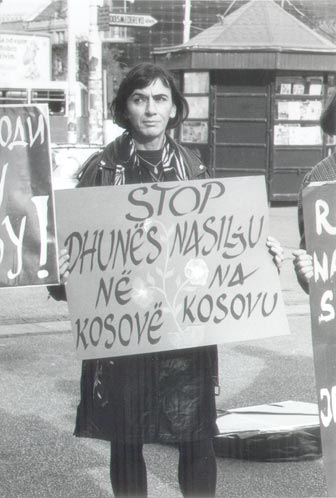 A friend of mine just asked me about my opinion and thoughts on this piece about the 1999 Nato action in Kosovo that appeared in the Guardian today. This is what I had to say:


 A few nights ago, Robija (which means 'slave') decided that it would be so heroic to break into the new mosque being reconstructed in Zvornik, eastern Bosnia, climb up the minaret and wave the Serbian flag to show what a great Orthodox Christian he is and who's boss to those Muslims. Bless! But he's a smart one as he took with him some alcoholic drinks, food and some wooden slats to barricade the entrance to the mosque. Word got around Zvornik about Robija on the minaret and a crowd came to see the spectacle, many of whom were cheering him on.
